Showing posts with label Novel in November. Show all posts
Showing posts with label Novel in November. Show all posts
Sunday, November 27, 2011
Write a Novel in November, Post #10
They are just words: the field, the shovel, the hole, the blouse, the glue holding the buttons, the buttons. A stick of yellow. A coming together, a reunion, a departure from, an isolation. The buttons, the buttons. Mountains. Water. The river. The can. The Mountain Dew. The stethoscope, the optic nerves, the nervous hands, the twitching, the dirt, the planet. Be just. But justice was in the straw. He was sweating through his shirt from his shin down the shovel the snow was melting and she was digging stuffing the snow in her blouse and the sun thawed out the sun thawed her out the rhythm she was dancing his arms were up her palms facing him the dirt and the dirt and the buttons she was hot and the heat fell through his shirt she was holding him up check the heartbeat and back and the buttons and everything yellow and the river sang softly and everything was painful and white bleached from the sun around her neck the shape the shape was a word on a field. Pick it up. Plant it.


Wednesday, November 23, 2011
Write a Novel in November, Post #9
"I am running, running through a wood. My hair is sap and the sap is from the wood. My feet are terribly calloused and terribly white for feet. The sun sounds like a song I once heard in a waiting room. In the waiting room by brain is split into heavens. There are strings falling from the wood or falling from the sky. Dare not call this heaven. No one can talk to me because I can only hear the strings. Everything else is muted. Even my hands are numb and my lips are numb and when the sap breaks apart it doesn't snap. The snap is mute but I can feel it in my brain, like a thick germ pulsing, pushing itself around, then bursting into dust."
Saturday, November 12, 2011
Write a Novel in November, Post #8
"Am I alive?"
"It's possible."
"And the trees?"
"It's possible."
"And the maple?"
"It's flowing through you."
"And the snow?"
"It's melting."
"And the flowers?"
"They're melting too."
"And the river?"
"It's flowing through us."
"Is it garbage-day?"
"It's Saturday."
"Is it a holy day?"
"It's Saturday."
"Is it a windy day?"
"Our skin is bound by the wind."
"How is my mother?"
"She is possible."
"How is my father?"
"He is possible."
"What kind of planet is this?"
"It is warm and it is cold."
"Am I warm?"
"You are also cold"
"Who are you?"
"I am your sister."
"Why don't I remember?"
"Why don't you remember?"
"Where is the yellow blouse?"
"It's tied around your neck."
"Where are the yellow flowers?"
"They are still in the field."
"How far are we from the field?"
"We are planets away."
"Are you sure I'm alive."
"It's possible I am alive, so yes."
"Will you stay with me tonight?"
"I will stay with you on all nights."
"Am I leaking?"
"That is the river."
"Should I swim?"
"You have to lift your arms."
"I can move my arms."
"Someone will do that for you."
"Isn't this strange?"
"It's Saturday, isn't that strange?"
"It's possible."
"It's possible."
I've been waiting for her to wake up for three weeks. For three weeks I've slept off and on in the chair next to the hospital bed. I sleep with others' strands of hair stuck in the chair's fabric. Sometimes I put her hand in mine and sometimes I do not. There should be a window in here. Hospitals shouldn't have so many televisions. All this feels like an experiment in how cruelty. When will she leave? the nurses whisper to one another. They think I don't want to be here. That I am here out of jealously. That my love is cruel. When will she leave? I ask myself, too. I ask the television mounted to the wall and chained to the mount. I ask the rubber gloves and the canister of q-tips. I ask the linoleum floor and the trashcan full of tourniquets. I ask the windowless room and everyone outside of it. I ask the shadows that are here and the ones that are coming.
*
The doctor felt guilty in the cafeteria. He didn't want wave to anyone. He didn't want to say hello to the woman or goodbye to the man. He didn't like saying thank you to anyone plopping down a meatloaf or a corn cob onto his plate, falling off onto the tray. He felt guilty for taking the long table for himself, for putting his body on one chair, and his bag on another chair. He hated how warm the room became when too many bodies occupied too many chairs. He hated when a patient's family sat down beside him. He hated when a former patient wouldn't come sit beside him. He always left the cafeteria with something in his lungs, like he had swallowed some glue and would keep swallowing for the rest of his life.
When he saw her in the hallway he asked her how long she had been awake. "Am I awake?" she asked. "Well you certainly look awake," he said, "now don't you?" "Where is my sister?" "Well, I'm not sure. Let's take you back to your room." "But I want to go to the field." He tried to take hold of her hand, but she clenched, and backed away. He went into the room to find her sister, who was asleep in the chair with one hand on the hospital bed and one hand hanging freely. They were both asleep.
*
"Hello?"
"Hi mom."
"Hello dear!"
"Why are you calling today? It's Saturday. You always call on a Sunday."
"I know it's Saturday, mom."
"Ok, then. How is everything?"
"Well I needed you to know something."
"Okay, dear. What is it that I need to know?"
"Emily is in the hospital."
"The hospital? What happened? Which hospital."
"Well, no one is really sure what happened."
"What do you mean no one knows?"
"She's asleep."
"Asleep?"
"Yes, and she hasn't woken up. She hasn't spoken to us."
"What do you mean?"
"The doctor, the nurses, me. She hasn't said a word. Well sometimes she says things. But they never make sense. Something always about yellow. Something about a planet. There are always flowers. Sometimes she mentions the snow."
"Snow? It's the summer for christ's sake!"
"I know it's summer, mom."
"I know you know, dear. Well, which hospital? I need to see her."
"She's at Greenhill Memorial."
"Greenhill? That will take me hours. How did she get all the way out there?"
"They found her in a field."
"A field?"
"Yes. They found her in a field, next to a hole in the ground."
"This is unbelievable."
"There was a hole in the ground that she may have crawled out of, but no one knows how she got in there. She might have dug it herself. She might have been thrown in."
"Oh my god!"
"They found her with her top off. She was rolling around in the dirt. The police were going to arrest her. But then they realized she was having a seizure. And when I got to the hospital she was already asleep."
"I'm coming."
"But don't you want to hear the rest?"
"No, I want to come. I'll be there in a few hours."
"Ok."
"Ok."

"It's possible."
"And the trees?"
"It's possible."
"And the maple?"
"It's flowing through you."
"And the snow?"
"It's melting."
"And the flowers?"
"They're melting too."
"And the river?"
"It's flowing through us."
"Is it garbage-day?"
"It's Saturday."
"Is it a holy day?"
"It's Saturday."
"Is it a windy day?"
"Our skin is bound by the wind."
"How is my mother?"
"She is possible."
"How is my father?"
"He is possible."
"What kind of planet is this?"
"It is warm and it is cold."
"Am I warm?"
"You are also cold"
"Who are you?"
"I am your sister."
"Why don't I remember?"
"Why don't you remember?"
"Where is the yellow blouse?"
"It's tied around your neck."
"Where are the yellow flowers?"
"They are still in the field."
"How far are we from the field?"
"We are planets away."
"Are you sure I'm alive."
"It's possible I am alive, so yes."
"Will you stay with me tonight?"
"I will stay with you on all nights."
"Am I leaking?"
"That is the river."
"Should I swim?"
"You have to lift your arms."
"I can move my arms."
"Someone will do that for you."
"Isn't this strange?"
"It's Saturday, isn't that strange?"
"It's possible."
"It's possible."
I've been waiting for her to wake up for three weeks. For three weeks I've slept off and on in the chair next to the hospital bed. I sleep with others' strands of hair stuck in the chair's fabric. Sometimes I put her hand in mine and sometimes I do not. There should be a window in here. Hospitals shouldn't have so many televisions. All this feels like an experiment in how cruelty. When will she leave? the nurses whisper to one another. They think I don't want to be here. That I am here out of jealously. That my love is cruel. When will she leave? I ask myself, too. I ask the television mounted to the wall and chained to the mount. I ask the rubber gloves and the canister of q-tips. I ask the linoleum floor and the trashcan full of tourniquets. I ask the windowless room and everyone outside of it. I ask the shadows that are here and the ones that are coming.
*
The doctor felt guilty in the cafeteria. He didn't want wave to anyone. He didn't want to say hello to the woman or goodbye to the man. He didn't like saying thank you to anyone plopping down a meatloaf or a corn cob onto his plate, falling off onto the tray. He felt guilty for taking the long table for himself, for putting his body on one chair, and his bag on another chair. He hated how warm the room became when too many bodies occupied too many chairs. He hated when a patient's family sat down beside him. He hated when a former patient wouldn't come sit beside him. He always left the cafeteria with something in his lungs, like he had swallowed some glue and would keep swallowing for the rest of his life.
When he saw her in the hallway he asked her how long she had been awake. "Am I awake?" she asked. "Well you certainly look awake," he said, "now don't you?" "Where is my sister?" "Well, I'm not sure. Let's take you back to your room." "But I want to go to the field." He tried to take hold of her hand, but she clenched, and backed away. He went into the room to find her sister, who was asleep in the chair with one hand on the hospital bed and one hand hanging freely. They were both asleep.
*
"Hello?"
"Hi mom."
"Hello dear!"
"Why are you calling today? It's Saturday. You always call on a Sunday."
"I know it's Saturday, mom."
"Ok, then. How is everything?"
"Well I needed you to know something."
"Okay, dear. What is it that I need to know?"
"Emily is in the hospital."
"The hospital? What happened? Which hospital."
"Well, no one is really sure what happened."
"What do you mean no one knows?"
"She's asleep."
"Asleep?"
"Yes, and she hasn't woken up. She hasn't spoken to us."
"What do you mean?"
"The doctor, the nurses, me. She hasn't said a word. Well sometimes she says things. But they never make sense. Something always about yellow. Something about a planet. There are always flowers. Sometimes she mentions the snow."
"Snow? It's the summer for christ's sake!"
"I know it's summer, mom."
"I know you know, dear. Well, which hospital? I need to see her."
"She's at Greenhill Memorial."
"Greenhill? That will take me hours. How did she get all the way out there?"
"They found her in a field."
"A field?"
"Yes. They found her in a field, next to a hole in the ground."
"This is unbelievable."
"There was a hole in the ground that she may have crawled out of, but no one knows how she got in there. She might have dug it herself. She might have been thrown in."
"Oh my god!"
"They found her with her top off. She was rolling around in the dirt. The police were going to arrest her. But then they realized she was having a seizure. And when I got to the hospital she was already asleep."
"I'm coming."
"But don't you want to hear the rest?"
"No, I want to come. I'll be there in a few hours."
"Ok."
"Ok."

Thursday, November 10, 2011
Write a Novel in November, Post #7
"Because I am cruel, I did this to you."
His hands were sticky and when one sticky hand touched the other sticky hand, he wasn't sure if he belonged to them. She collapsed in the dirt and they were sticky. His hands in the sun and the melting. It was warm and then it was cold. She collapsed in the dirt and the snow settled in. He picked up the large shovel with the red handle that she loved. He picked it up like a sack of leaves that she loved. He leaned down to ask her what else is there to love?
And this happened on a Saturday. He didn't know that as the snow covered her body the sun covered the snow. The sun melted the snow which melted her body. He didn't know that she became the dirt and the flowers grew around her. They grew between her toes and behind her knees. He didn't know they would grow over her chest, and into a yellow blouse. He didn't know that the flowers would creep into her mouth and that she would taste them. He didn't know that they would taste like maple and leave shadows on her tongue. He didn't know that when she woke up she would be warm and cold and see yellow in the river and hear yellow in the trees. He didn't know that she would wake up singing
But it's Saturday
and I am an animal!
I am from the field
of no return!
But it's Saturday
and you are an animal!
And he didn't know that when they found her she would be singing,
But it's not enough!
And it's not enough!
On Saturday they found her running through the field with her palms reaching the sky. She spread her fingers widely like superbly white sheets. At first they watched her running, as if they had already given up catching her. As if the police had already needed to breathe. But then the circles she ran in became gruesome. The repetition made the police dizzy. They tried standing on one foot so the circles wouldn't affect them. Then they tried sitting in the bentgrass but the circles came closer. Her yellow blouse flew up and into the air and down and into one of their laps in an ejaculating gust. Inside her chest was a ball of snow and as the ball of snow started to melt her circling slowed down. The police stood up, one carrying the blouse loosely in his hand, and walked toward her. Her slow circles became small, so small that she collapsed inside them. The doctor told me that they found her with a yellow blouse around her neck, and that she was blinking as though none of us could ever exist.
His hands were sticky and when one sticky hand touched the other sticky hand, he wasn't sure if he belonged to them. She collapsed in the dirt and they were sticky. His hands in the sun and the melting. It was warm and then it was cold. She collapsed in the dirt and the snow settled in. He picked up the large shovel with the red handle that she loved. He picked it up like a sack of leaves that she loved. He leaned down to ask her what else is there to love?
And this happened on a Saturday. He didn't know that as the snow covered her body the sun covered the snow. The sun melted the snow which melted her body. He didn't know that she became the dirt and the flowers grew around her. They grew between her toes and behind her knees. He didn't know they would grow over her chest, and into a yellow blouse. He didn't know that the flowers would creep into her mouth and that she would taste them. He didn't know that they would taste like maple and leave shadows on her tongue. He didn't know that when she woke up she would be warm and cold and see yellow in the river and hear yellow in the trees. He didn't know that she would wake up singing
But it's Saturday
and I am an animal!
I am from the field
of no return!
But it's Saturday
and you are an animal!
And he didn't know that when they found her she would be singing,
But it's not enough!
And it's not enough!
On Saturday they found her running through the field with her palms reaching the sky. She spread her fingers widely like superbly white sheets. At first they watched her running, as if they had already given up catching her. As if the police had already needed to breathe. But then the circles she ran in became gruesome. The repetition made the police dizzy. They tried standing on one foot so the circles wouldn't affect them. Then they tried sitting in the bentgrass but the circles came closer. Her yellow blouse flew up and into the air and down and into one of their laps in an ejaculating gust. Inside her chest was a ball of snow and as the ball of snow started to melt her circling slowed down. The police stood up, one carrying the blouse loosely in his hand, and walked toward her. Her slow circles became small, so small that she collapsed inside them. The doctor told me that they found her with a yellow blouse around her neck, and that she was blinking as though none of us could ever exist.
Tuesday, November 8, 2011
Write a Novel in November, Post #6
They met on a Saturday. The snow was clinging to the windows of the shed and she was inside. She was counting the pennies in the ceramic jar. She liked to count in tens and push the penny-towers aside until she had an entire city. She liked to smell her fingers every now and then, sniff the copper, then go back to work.
And he liked the way his hands smelled after a day of making piles. He liked to break the land apart and see what was underneath it. When she found him, she asked what kind of surgeon he was, and why he didn't wear a white coat, and why his tools were so large. He let her go on and on about the pennies, about how she was building an entire nation out of pennies. He let her laugh at herself while he pointed the tip of the shovel to the earth. He drew a circle with the tip, then pushed down, letting the middle of the circle collapse into the dirt.
She watched him dig. She walked around his large body, positioning herself diagonally behind his back like a shadow. When he turned so did she. Like the sun. Like the sun telling him what time of day it was. She circled around him and collapsed in the dirt.
Get up! Get up! Sometimes I yell out of love. Sometimes I yell out of jealousy. Sometimes I yell , because the planets are cruel, because the sun is cruel, because I am cruel.
And he liked the way his hands smelled after a day of making piles. He liked to break the land apart and see what was underneath it. When she found him, she asked what kind of surgeon he was, and why he didn't wear a white coat, and why his tools were so large. He let her go on and on about the pennies, about how she was building an entire nation out of pennies. He let her laugh at herself while he pointed the tip of the shovel to the earth. He drew a circle with the tip, then pushed down, letting the middle of the circle collapse into the dirt.
She watched him dig. She walked around his large body, positioning herself diagonally behind his back like a shadow. When he turned so did she. Like the sun. Like the sun telling him what time of day it was. She circled around him and collapsed in the dirt.
Get up! Get up! Sometimes I yell out of love. Sometimes I yell out of jealousy. Sometimes I yell , because the planets are cruel, because the sun is cruel, because I am cruel.
Monday, November 7, 2011
Write a Novel in November, Post #5
Was it out of cruelty that she started digging the grave years before his death? Was it out of love that she dug escape routes in the dirt, complex as nerve endings? What is out of jealously that she dug so deeply no one would be able to trip over an arm or a kneecap?
Was it rude for her to use his shovels, the set with the wooden handles, the ones that used to give him splinters?
All these questions won't do any good. The doctor approaches the door frame, as though he recognizes the privilege of his stethoscope, his otoscope, his ophthalmoscope, and his petella hammer. The room seems empty, even as her chest rises and falls like petals pushing up and down in an ejaculating gust. Her breathing is heavy, but soft. Her ribcage is heavy, but soft. He remembers what it looks like inside. He remembers tapping her bones and jumping away from them. He remembers when she first arrived with the yellow blouse wrapped around her neck. He remembers the curve in her spine and the sweat between her knuckles. He remembers pushing the hair off her face, wrapping a strand around his finger until it snapped. He remembers how it smelled like Spring in the room and how he went home and it smelled like Spring inside the house. He remembers this room, as it was, as it is. One picture, framed in a cheap bronze, hangs as though there is no wall.
He walks around the bed and stops at her shoulder. He lifts her arm and wraps the plastic band around it, letting the wrist fall to her side, facing the sky. He puts the stethoscope under the band and counts each beat. In her head she is thinking about the dark planets and the all the fields that give them light. She is rubbing the planets between her thumb and forefinger, squeezing the light out of them like glue. He shines the ophthalmoscope into all the eye parts, the irises shriveling, collapsing in the sun. Through a microscope he can see her optic nerves shiver. He puts the blanket over her face, and sits down next to the bed.
He takes the petella hammer from his superbly white coat pocket and swings it back and forth like a lever, like it would shift all the molecules in the air so that it wouldn't be so cold and it wouldn't be so warm. He takes the orange triangle and taps his kneecaps so that his shins jerk up like a balloon does just before the pin is removed and it pops. He grips the petella hammer back and puts it back into his coat pocket still gripping. When he lets go, the balloons pop. His kneecaps collapse into his knees. He says to her, "You can tell they are coming when you stop noticing the shadows." The fields are empty, and her breathing is soft and heavy.
Was it rude for her to use his shovels, the ones she stole from his eyes and wrote down on paper? Did she do this out of love, or jealousy, or cruelty?
He faces her. He remembers the yellow blouse. He remembers what was covering her neck. He remembers what she said about the snow, that she could no longer see him. Am I drowning in this snow?
And so there she is, propped up with three pillows, one just behind the neck, one against the small of her back, and one underneath her head. She is superbly white, the blanket draped over the crown of her head, each thread hanging like a crystal of a chandelier. And so there he is, watching her sparkle through the spaces in the cotton. He looks at her through these holes, as if this is a new technique--the last resort--to catch something in the act. He spends a few minutes looking, then thinking, then he goes back to looking. After the minutes pass and he checks his pocket, he finds a five dollar bill and the hammer. He removes the blanket from the crown of her head, unwraps the plastic band from her arm, and places her wrist so it is no longer reaching at the sky.
The planets inflate like hearts in her fists. The planets are dark like the bottom of the ocean where you can never turn back. She runs through the fields and as she runs they disappear behind her. It's no longer warm. She puts on her white socks. There's snow on her feet. The snow has no shadow.

Was it rude for her to use his shovels, the set with the wooden handles, the ones that used to give him splinters?
All these questions won't do any good. The doctor approaches the door frame, as though he recognizes the privilege of his stethoscope, his otoscope, his ophthalmoscope, and his petella hammer. The room seems empty, even as her chest rises and falls like petals pushing up and down in an ejaculating gust. Her breathing is heavy, but soft. Her ribcage is heavy, but soft. He remembers what it looks like inside. He remembers tapping her bones and jumping away from them. He remembers when she first arrived with the yellow blouse wrapped around her neck. He remembers the curve in her spine and the sweat between her knuckles. He remembers pushing the hair off her face, wrapping a strand around his finger until it snapped. He remembers how it smelled like Spring in the room and how he went home and it smelled like Spring inside the house. He remembers this room, as it was, as it is. One picture, framed in a cheap bronze, hangs as though there is no wall.
He walks around the bed and stops at her shoulder. He lifts her arm and wraps the plastic band around it, letting the wrist fall to her side, facing the sky. He puts the stethoscope under the band and counts each beat. In her head she is thinking about the dark planets and the all the fields that give them light. She is rubbing the planets between her thumb and forefinger, squeezing the light out of them like glue. He shines the ophthalmoscope into all the eye parts, the irises shriveling, collapsing in the sun. Through a microscope he can see her optic nerves shiver. He puts the blanket over her face, and sits down next to the bed.
He takes the petella hammer from his superbly white coat pocket and swings it back and forth like a lever, like it would shift all the molecules in the air so that it wouldn't be so cold and it wouldn't be so warm. He takes the orange triangle and taps his kneecaps so that his shins jerk up like a balloon does just before the pin is removed and it pops. He grips the petella hammer back and puts it back into his coat pocket still gripping. When he lets go, the balloons pop. His kneecaps collapse into his knees. He says to her, "You can tell they are coming when you stop noticing the shadows." The fields are empty, and her breathing is soft and heavy.
Was it rude for her to use his shovels, the ones she stole from his eyes and wrote down on paper? Did she do this out of love, or jealousy, or cruelty?
He faces her. He remembers the yellow blouse. He remembers what was covering her neck. He remembers what she said about the snow, that she could no longer see him. Am I drowning in this snow?
And so there she is, propped up with three pillows, one just behind the neck, one against the small of her back, and one underneath her head. She is superbly white, the blanket draped over the crown of her head, each thread hanging like a crystal of a chandelier. And so there he is, watching her sparkle through the spaces in the cotton. He looks at her through these holes, as if this is a new technique--the last resort--to catch something in the act. He spends a few minutes looking, then thinking, then he goes back to looking. After the minutes pass and he checks his pocket, he finds a five dollar bill and the hammer. He removes the blanket from the crown of her head, unwraps the plastic band from her arm, and places her wrist so it is no longer reaching at the sky.
The planets inflate like hearts in her fists. The planets are dark like the bottom of the ocean where you can never turn back. She runs through the fields and as she runs they disappear behind her. It's no longer warm. She puts on her white socks. There's snow on her feet. The snow has no shadow.
Sunday, November 6, 2011
Write a Novel in November, Post #4
But it's Saturday she said, looking downward into the spirals of creeping bentgrass. She picked blades with her thumb and forefinger as though it were an obsession, all this uprooting. She noticed the man who never seemed to notice her. His eyelids were metal; he wore shovels on his face. He would grunt, wipe the sweat off his face, then look at the sun, as though it would tell him it's enough already. She used to walk down to the field to hear his grunts, the sound of harlequin ducks swimming by the river.
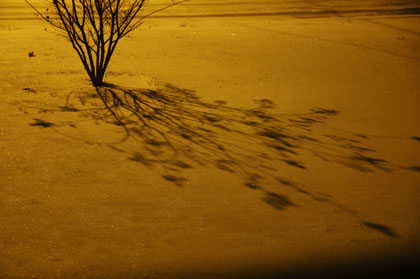
One time she took off her yellow blouse because it was hot, hotter than the days before. Because the sun seemed to collapse into all of her joints, she undid each button like a bone. She sweat between her biceps and forearms, behind her knees, on the small of her back, and the back of her neck. She placed the blouse down on the bentgrass, and the blades were so sharp that a few poked her biceps and forearms, behind her knees, on the small of her back, and the back of her neck as she lay face up to the sky. With her arm blocking her eyes, she saw his shovel-eyes, his breath mixing with the wind, an ejaculating gust making a shadow, tall as the maples' shadows.

One might guess that the wind blew her blouse away, that it shriveled into a ball, getting lost in the spirals of leaves blown up by the ejaculating gust. One might guess her bare chest was covered with pollen, yellow as the cotton dyed in the Spring. One might imagine his grunts, when strung together, sounded like a song, a lullaby of tin and bone. One might imagine the taste of the sweat between her biceps and forearms, behind her knees, on the small of her back, and the back of her neck. One might say it's enough already as his shadow might press against the bentgrass, as the harlequin ducks stick their heads in the river and talk amongst themselves. One might imagine a river cold enough to freeze their heads into the water. One might say that their spines are strong as the maple, that they keep the blood warm for minutes. One might hear the language spoken under the water and report it in a letter. One might say that the ducks had grunts of their own, and that the winter came suddenly and turned everything superbly white.
She sang this and that, watched her yellow blouse turn green against the blueness of the sky. She felt the heat leave her skin sorrowful and afraid of whatever was to come.
She ran through the field singing But it's Saturday! But it's Saturday! And indeed, it was. It was the last Saturday left that year.
One time she took off her yellow blouse because it was hot, hotter than the days before. Because the sun seemed to collapse into all of her joints, she undid each button like a bone. She sweat between her biceps and forearms, behind her knees, on the small of her back, and the back of her neck. She placed the blouse down on the bentgrass, and the blades were so sharp that a few poked her biceps and forearms, behind her knees, on the small of her back, and the back of her neck as she lay face up to the sky. With her arm blocking her eyes, she saw his shovel-eyes, his breath mixing with the wind, an ejaculating gust making a shadow, tall as the maples' shadows.

One might guess that the wind blew her blouse away, that it shriveled into a ball, getting lost in the spirals of leaves blown up by the ejaculating gust. One might guess her bare chest was covered with pollen, yellow as the cotton dyed in the Spring. One might imagine his grunts, when strung together, sounded like a song, a lullaby of tin and bone. One might imagine the taste of the sweat between her biceps and forearms, behind her knees, on the small of her back, and the back of her neck. One might say it's enough already as his shadow might press against the bentgrass, as the harlequin ducks stick their heads in the river and talk amongst themselves. One might imagine a river cold enough to freeze their heads into the water. One might say that their spines are strong as the maple, that they keep the blood warm for minutes. One might hear the language spoken under the water and report it in a letter. One might say that the ducks had grunts of their own, and that the winter came suddenly and turned everything superbly white.
She sang this and that, watched her yellow blouse turn green against the blueness of the sky. She felt the heat leave her skin sorrowful and afraid of whatever was to come.
She ran through the field singing But it's Saturday! But it's Saturday! And indeed, it was. It was the last Saturday left that year.
Saturday, November 5, 2011
Write a Novel in November, Post #3

"Good morning." He kisses her behind her neck. He seems to hover there for a moment, then swiftly walks away to open the refrigerator, to pour himself a glass of orange juice. He pours from the ceramic pitcher, letting a little juice fall onto his blue and gold striped socks. He feels warm and cold and lets the acidic liquid sit on the gums in his mouth, expanding between his teeth, letting the inside of his cheeks burn a little before he swallows. He sits down at the kitchenette, which faces the window, and watches the middle of the sun contract, and feels his belly contract, and he is warm and cold at the same time.
"It's time to get rid of it, don't you think?" she leans the back of her head against the refrigerator so that she is facing him but looking up.
"No, not today."
"But it's Saturday."
"Exactly. Why would I want to waste my Saturday?"
He usually works on Saturdays, weeding and shoveling until six or seven in the evening. He's usually too tired to put his dinner in his mouth. Like the last Saturday when he came home with a welt on the back of his neck and when she asked him how it had happened he said it was the animals and she thought to herself what kind of animal could so such a thing? but instead of saying words she sang them with plates and forks and glasses of lemonade. He picked up the fork and looked down at his plate. He picked up the fork and let it drop onto the plate. Then everything became very high pitched. He could hear the birds from the field, and the wind passing through the wet petals in the morning. He could see the sun losing air, collapsing into the wet ground like orange peels and orange leaves. He began blinking rapidly. The blood rushed from his head and his arms and his belly into his throat, and filled his mouth with smooth blood. The smooth blood was on his gums and between his teeth, filling the inside of his mouth. When he could no longer hold all the blood inside, he let a little drip on his toes and he was warm and cold at the same time.
Her singing got louder and became more like a scream. Her singing got a lot of attention from the neighbors and police, from the ambulance and the doctor, from the insurance company and his landscaping company. And although he didn't blame his wife, he blamed her. He blamed her superbly white skin, the darkness in her cornea, and the songs in her throat.
He stands up with the glass of orange juice in his mouth, swishing, thinking about the sun and Saturdays and how there will be no more work on days like this, days that hover just behind the field where the animals live with a thousand strings wrapped around their necks and staked to the ground.
Friday, November 4, 2011
Write a Novel in November, Post #2
The doctor always seems like he's leaving in my memory of him. His face looks sore, like he has recently taken bandages off his cheeks. He looks like he's been cut with an extremely small knife, one made in tiny town with a tiny knife shop. It's a blade that someone surprises you with, one that fits perfectly into the pocket of a dress. His neck-skin seems too tight, not too tight for his age, but too tight to be human. You can tell by his ears that the skin on his body is smooth. One day when he was explaining cartilage he let me touch the outer rim of his right ear. It felt like a petal would feel after a windstorm. His eyes are deep like water towers. Ones that you climb up as a child, like a cat, you're not asking to be rescued. You're asking to see the world.
But I'm always revising him. I go back and change him so that one day he is a blonde with a red and black tattoo running down his arms. Sometimes the ink looks like it comes in waves. Sometimes it's in the shape of a wolf and the wolf is always smiling. Sometimes the doctor comes in the room and you can hardly see his eyes because they are superbly white--like the pupil, the iris, and the cornea all blend together in a vanilla milkshake. Sometimes the wolf leaps out from his skin and sticks to hers. Sometimes I move the sheets around to see her arms, and sometimes the wolf is gnawing at them. And there is nothing I can do. There are piles of snow. I watch. And sometimes it's out of love, jealously, or cruelty. But sometimes I don't think much at all about the wolf and I hold her arms above her head, then let them go gently back down. I do this with her over and over to get the blood moving mostly, but also because when the palms of her hands are almost to the ceiling she seems happy enough to blink.
But I'm always revising him. I go back and change him so that one day he is a blonde with a red and black tattoo running down his arms. Sometimes the ink looks like it comes in waves. Sometimes it's in the shape of a wolf and the wolf is always smiling. Sometimes the doctor comes in the room and you can hardly see his eyes because they are superbly white--like the pupil, the iris, and the cornea all blend together in a vanilla milkshake. Sometimes the wolf leaps out from his skin and sticks to hers. Sometimes I move the sheets around to see her arms, and sometimes the wolf is gnawing at them. And there is nothing I can do. There are piles of snow. I watch. And sometimes it's out of love, jealously, or cruelty. But sometimes I don't think much at all about the wolf and I hold her arms above her head, then let them go gently back down. I do this with her over and over to get the blood moving mostly, but also because when the palms of her hands are almost to the ceiling she seems happy enough to blink.
Thursday, November 3, 2011
Write a Novel in November, Post #1
Sure, why not? Why not start now?

The air was as smooth as the inside of her mouth. Or was it that the inside of her mouth had some air in it? Yellow air, yellow mouth. When she sang everything turned daisy and yellow cake in a box. The air was sweet and her mouth was spongy. She had gluestick circles on her hips, the color of lemonade. The gluestick circles were marks that he put there. He put them there with the ease of the air. Spring, yellow, air, flowers, everything sticking together so perfectly. Like gluestick positioning. Like old glue that turns yellow after sitting too long on the skin. Like the singing from the other rooms when her room is silent. The inside of her mouth, half opened, half letting the air swish through her teeth. The yellow teeth. The brushing that the nurse does after she pees half on the seat. Halfway to the door, she leaves a bright yellow path from her bed. I followed it to the sun which collapsed when I blinked. The sun collapsed and the air was smooth, cold, stuck to the inside of a song. So perfectly glue. How the skin will stick to blood, to bone, to the old yellowing band-aids over her thumbs. How when I asked her what is your name she said that she came from a star called "No return" and drooled a little when she said it. No Return from the skin under the band-aid, the smooth wrinkles. Everything here belongs in a song. He checked on her when the beeping began, when the sun collapses into the sticky floor. The beeping sung deep into her ears no return, no return, no return like the chimes someone made from aquatic hipbones, the way a scream sounds when submerged under water.
The doctor returns to the cafeteria with a five dollar bill, which buys him a slim chicken bone plated on top of a superbly white rice. His fork travels slowly from between his thumb and forefinger toward the inside of his mouth. He is slurping Mountain Dew from a straw in a can. The can is dented from a harsh soda-machine journey. The slopes of the machine. The valleys of the tin. Both remind him of the sun, of almost reaching it, as he once stood on a steep edge of Mount Rainier and held out his hands and screamed no return! As he slurps he begins to hear a song. He puts one eye against the aperture of the straw to see the song. The song has a sucking force that makes his eyeball seem more like air than slime. The song makes him blink and the Mountain Dew tears up under his eyelid. The other doctors never watch him, never blink out of jealousy, love, or cruelty. He keeps his one eye inside the straw, bathing in the Mountain Dew. One eye is stuck on the mountain, the smooth air passing over the cornea, hitting the orbital muscles with each ejaculating gust. The other eye makes love to the chicken bone and the halo surrounding it. He thinks of her roaming around, all her bones glued together and moving. Where she's from is yellow and full of flower fields and lemonade stands. Every time she moves the airs turns superbly white, and there is silence. The doctor feels a vibration coming from his right hipbone. He is vibrating like a lawnmower and cautiously removes his eye from the straw in the Mountain Dew. He looks at his reflection in the clear parts of the chicken bone and rice plate. His eye is stained yellow from the Mountain Dew, from the sun which started on his cornea and leaked into pupil, then the lens where the white snow melted off Rainier's edge.
I couldn't tell if she had gone completely or if she was just melting into the snow. The airy, smooth hospital sheets and the snow. The smell of yellow embedded somewhere within the walls, and me. I watched her everyday, but not entirely out of jealousy, love, or cruelty. Some days I would answer that it was mostly love. And some days I would say that it was mostly jealously. And part of every day was cruel--a superbly white cruelty that crept into my cornea, leaking into my pupil, then the lens where my brain was somehow inevitably connected. I couldn't tell if it was winter in the room, but I knew that where she was from was always warm and glowing from the sun or from the mix of the sun and the rain. The doctor had told me about the sinking into the snow, and how the body prepares for the sinking with rapid movements. "Sometimes it will seem violent. Sometimes it will seem like her soul is reaching for the light above our heads." He told me that she will think that she's at a high altitude and she will stay there for maybe a few seconds or maybe for a long time--as long as a month or a year--but then she would sink into the air like a tooth sinks into the smooth inside of a cheek. Some days out of love I would cradle her head like a light bulb. Some days out of jealousy I would lounge next to her and get inside her sheets, giving myself more room on the bed than I should. Some days I would steal her socks and put them on my own feet and I'm not sure if this is considered an act of cruelty or not because where she is from it is always warm and glowing and that she would inevitably be connected to that memory of having white socks on in a field of yellow flowers.
I heard someone down the hall tell her husband that she would stick to him like glue. I heard the glue ripping apart when he sunk into the snow. She was wailing like a wife would be wailing like a wolf on the edge of a mountain, being pushed by the rapid movement of an ejaculating gust. I hear a woman running down the hallway, her shoes sound like tin, crushing the linoleum as though it were a can, making a valley into a footstep. Then I hear another woman running after the first woman, and she is running so fast that she is writing a song. All the notes are behind her trying to catch up but the rhythm is an echo and the echo is white and glowing high above each note. There is the tin valley and the sound of it gets deeper and further away, but I can't leave to see what's happening. We are watching an episode and although this is the same episode as the last one there is something compelling about sitting in a hospital bed wearing white socks, wrapped in layers and layers of sheets, and thinking about how cruel the repetition of love can be when it is based on jealously.
Maybe the air had passed though twenty or hundreds of rooms. Maybe the air was outside her very door. I wait with my eyeballs jutting out like a motor. My eyeballs hum; we sing together--eyeballs and everything else. The telephone, the vibrations in his pants, the space where the window should open, but instead is glued shut. We all wait for the snow to melt or for her. "You can tell they are coming when you stop noticing the shadows." He says this and so I wait for our shadows to disappear.
The doctor always seems like he's leaving in my memory of him.

The air was as smooth as the inside of her mouth. Or was it that the inside of her mouth had some air in it? Yellow air, yellow mouth. When she sang everything turned daisy and yellow cake in a box. The air was sweet and her mouth was spongy. She had gluestick circles on her hips, the color of lemonade. The gluestick circles were marks that he put there. He put them there with the ease of the air. Spring, yellow, air, flowers, everything sticking together so perfectly. Like gluestick positioning. Like old glue that turns yellow after sitting too long on the skin. Like the singing from the other rooms when her room is silent. The inside of her mouth, half opened, half letting the air swish through her teeth. The yellow teeth. The brushing that the nurse does after she pees half on the seat. Halfway to the door, she leaves a bright yellow path from her bed. I followed it to the sun which collapsed when I blinked. The sun collapsed and the air was smooth, cold, stuck to the inside of a song. So perfectly glue. How the skin will stick to blood, to bone, to the old yellowing band-aids over her thumbs. How when I asked her what is your name she said that she came from a star called "No return" and drooled a little when she said it. No Return from the skin under the band-aid, the smooth wrinkles. Everything here belongs in a song. He checked on her when the beeping began, when the sun collapses into the sticky floor. The beeping sung deep into her ears no return, no return, no return like the chimes someone made from aquatic hipbones, the way a scream sounds when submerged under water.
The doctor returns to the cafeteria with a five dollar bill, which buys him a slim chicken bone plated on top of a superbly white rice. His fork travels slowly from between his thumb and forefinger toward the inside of his mouth. He is slurping Mountain Dew from a straw in a can. The can is dented from a harsh soda-machine journey. The slopes of the machine. The valleys of the tin. Both remind him of the sun, of almost reaching it, as he once stood on a steep edge of Mount Rainier and held out his hands and screamed no return! As he slurps he begins to hear a song. He puts one eye against the aperture of the straw to see the song. The song has a sucking force that makes his eyeball seem more like air than slime. The song makes him blink and the Mountain Dew tears up under his eyelid. The other doctors never watch him, never blink out of jealousy, love, or cruelty. He keeps his one eye inside the straw, bathing in the Mountain Dew. One eye is stuck on the mountain, the smooth air passing over the cornea, hitting the orbital muscles with each ejaculating gust. The other eye makes love to the chicken bone and the halo surrounding it. He thinks of her roaming around, all her bones glued together and moving. Where she's from is yellow and full of flower fields and lemonade stands. Every time she moves the airs turns superbly white, and there is silence. The doctor feels a vibration coming from his right hipbone. He is vibrating like a lawnmower and cautiously removes his eye from the straw in the Mountain Dew. He looks at his reflection in the clear parts of the chicken bone and rice plate. His eye is stained yellow from the Mountain Dew, from the sun which started on his cornea and leaked into pupil, then the lens where the white snow melted off Rainier's edge.
I couldn't tell if she had gone completely or if she was just melting into the snow. The airy, smooth hospital sheets and the snow. The smell of yellow embedded somewhere within the walls, and me. I watched her everyday, but not entirely out of jealousy, love, or cruelty. Some days I would answer that it was mostly love. And some days I would say that it was mostly jealously. And part of every day was cruel--a superbly white cruelty that crept into my cornea, leaking into my pupil, then the lens where my brain was somehow inevitably connected. I couldn't tell if it was winter in the room, but I knew that where she was from was always warm and glowing from the sun or from the mix of the sun and the rain. The doctor had told me about the sinking into the snow, and how the body prepares for the sinking with rapid movements. "Sometimes it will seem violent. Sometimes it will seem like her soul is reaching for the light above our heads." He told me that she will think that she's at a high altitude and she will stay there for maybe a few seconds or maybe for a long time--as long as a month or a year--but then she would sink into the air like a tooth sinks into the smooth inside of a cheek. Some days out of love I would cradle her head like a light bulb. Some days out of jealousy I would lounge next to her and get inside her sheets, giving myself more room on the bed than I should. Some days I would steal her socks and put them on my own feet and I'm not sure if this is considered an act of cruelty or not because where she is from it is always warm and glowing and that she would inevitably be connected to that memory of having white socks on in a field of yellow flowers.
I heard someone down the hall tell her husband that she would stick to him like glue. I heard the glue ripping apart when he sunk into the snow. She was wailing like a wife would be wailing like a wolf on the edge of a mountain, being pushed by the rapid movement of an ejaculating gust. I hear a woman running down the hallway, her shoes sound like tin, crushing the linoleum as though it were a can, making a valley into a footstep. Then I hear another woman running after the first woman, and she is running so fast that she is writing a song. All the notes are behind her trying to catch up but the rhythm is an echo and the echo is white and glowing high above each note. There is the tin valley and the sound of it gets deeper and further away, but I can't leave to see what's happening. We are watching an episode and although this is the same episode as the last one there is something compelling about sitting in a hospital bed wearing white socks, wrapped in layers and layers of sheets, and thinking about how cruel the repetition of love can be when it is based on jealously.
Maybe the air had passed though twenty or hundreds of rooms. Maybe the air was outside her very door. I wait with my eyeballs jutting out like a motor. My eyeballs hum; we sing together--eyeballs and everything else. The telephone, the vibrations in his pants, the space where the window should open, but instead is glued shut. We all wait for the snow to melt or for her. "You can tell they are coming when you stop noticing the shadows." He says this and so I wait for our shadows to disappear.
The doctor always seems like he's leaving in my memory of him.
Subscribe to:
Posts (Atom)